
Paver Repair & Replacement in Santee, CA
Sunken, shifting, or damaged pavers usually don't mean starting over. Our Santee-based team diagnoses the actual cause underneath the surface and repairs it correctly the first time, restoring your patio, driveway, or walkway without the cost of a full replacement.
What Is Paver Repair & Replacement?
Paver repair is the process of correcting damaged, sunken, or shifting sections of an existing paver surface — usually by lifting the affected pavers, fixing the base underneath, and resetting them. It’s one of the biggest practical advantages pavers have over poured concrete or asphalt.
Because a paver surface is made of individual interlocking units rather than one continuous slab, a damaged section can be isolated and corrected without disturbing the surrounding area. This is what makes paver repair faster, less invasive, and less expensive than comparable concrete repair.
Most paver problems aren’t actually a problem with the pavers themselves — the pavers are almost always fine. The real issue is nearly always underneath: a poorly compacted base, water erosion, washed-out joint sand, or a failed edge restraint.
That’s why an accurate repair starts with identifying the root cause, not just resetting what’s visible on the surface. Repairing the symptom without fixing the underlying base issue usually means the same problem returns within a season or two.
Replacement, as opposed to repair, comes into play when a larger section of the surface — or the base beneath it — has failed broadly enough that resetting individual sections no longer makes sense. In those cases, a full or partial rebuild restores the surface properly.
Common Paver Problems We Repair
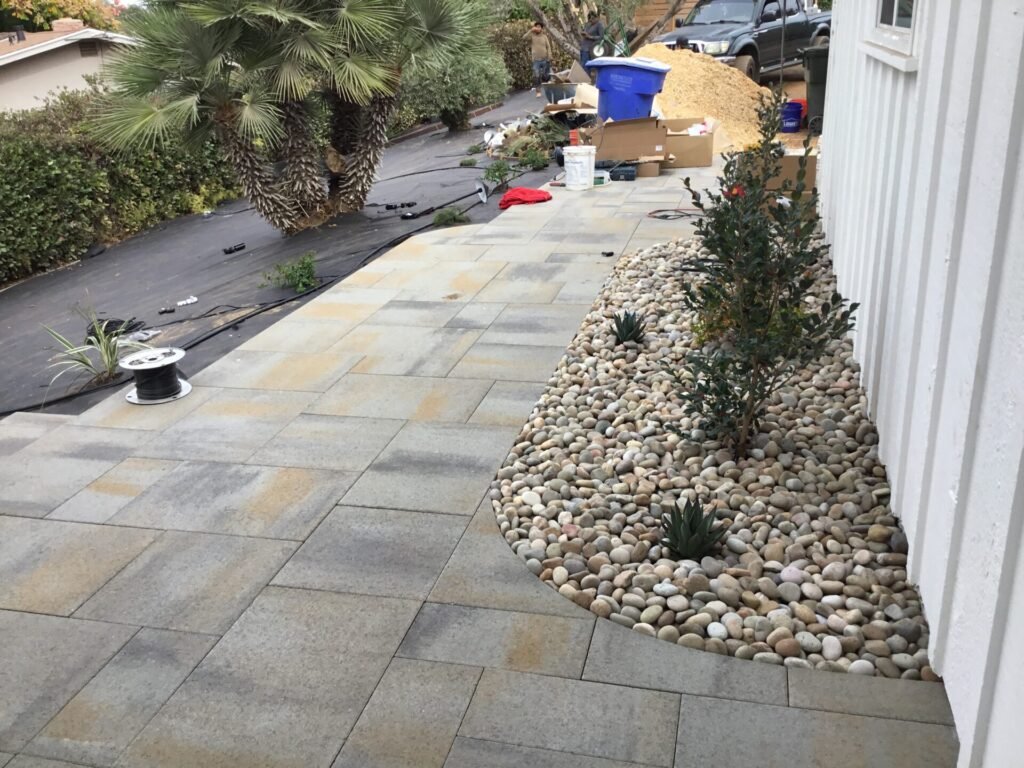
Sunken or Uneven Pavers
Sunken sections almost always trace back to a base that wasn’t compacted properly during the original installation, or one that’s been undermined by water erosion over time. The fix involves lifting the affected pavers, correcting and recompacting the base, and resetting them level.
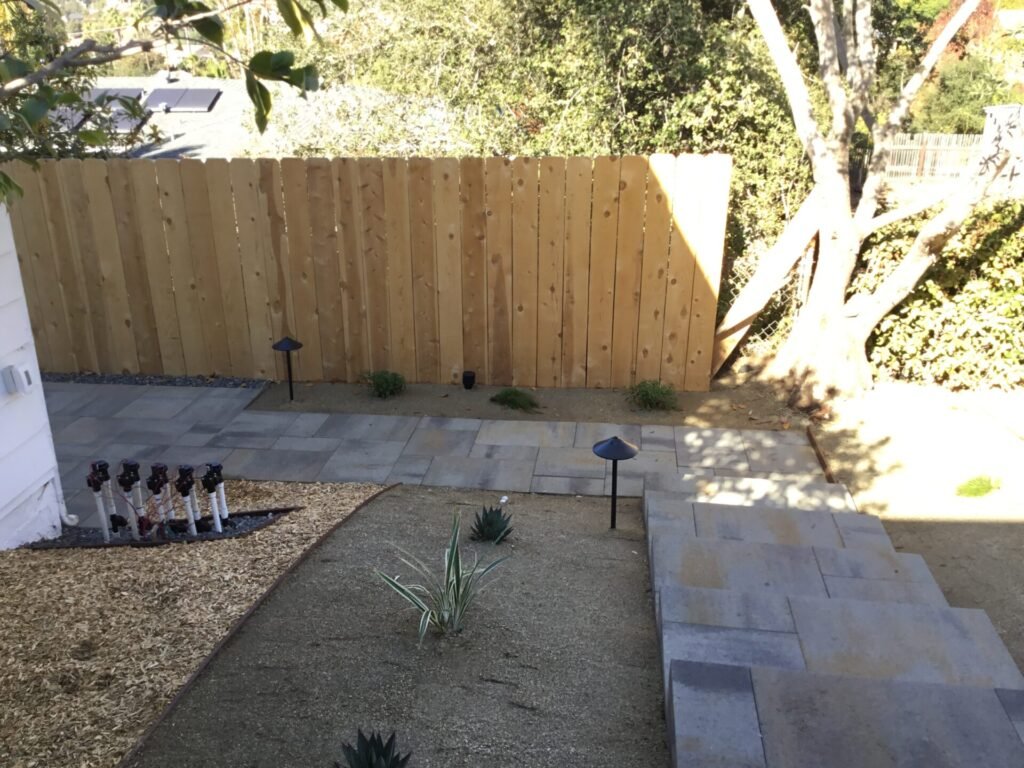
Shifting or Spreading Pavers
When pavers gradually spread apart or drift out of alignment, it’s usually a sign that the edge restraint along the perimeter has failed or was never properly installed. Reinstalling solid edge restraint is often the key to a lasting fix, not just resetting the loose pavers.
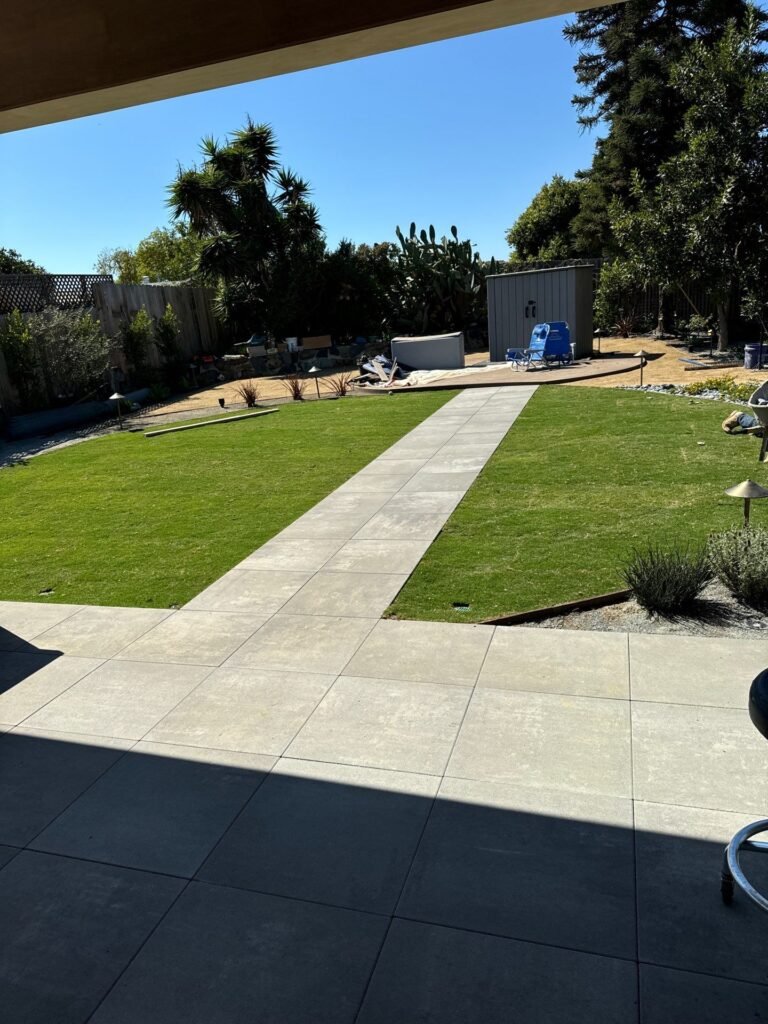
Cracked or Damaged Pavers
Individual cracked or chipped pavers — from impact, heavy loads, or age — can be removed and replaced with matching units without disturbing the rest of the surface, provided reasonably close-matching material is available.
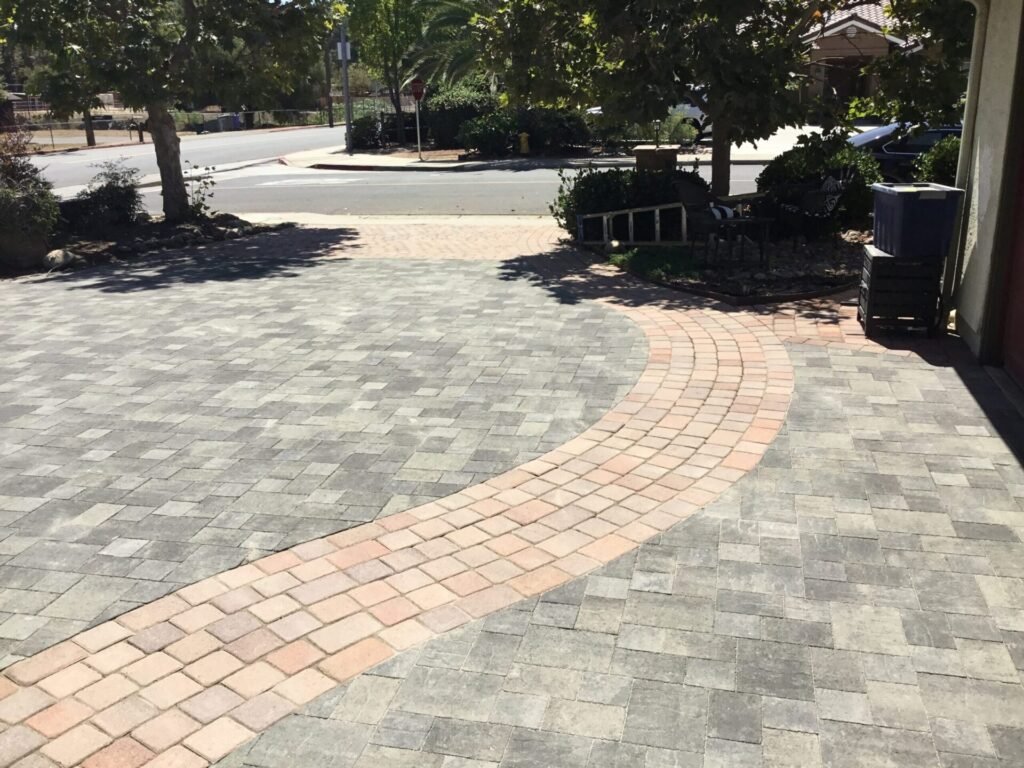
Weeds and Joint Sand Loss
Weeds and ant activity in the joints are almost always a sign that the original joint sand has washed out or eroded. Refilling joints with polymeric sand, which hardens when wet, resists washout and weed growth far better than plain sand.
Drainage and Standing Water Issues
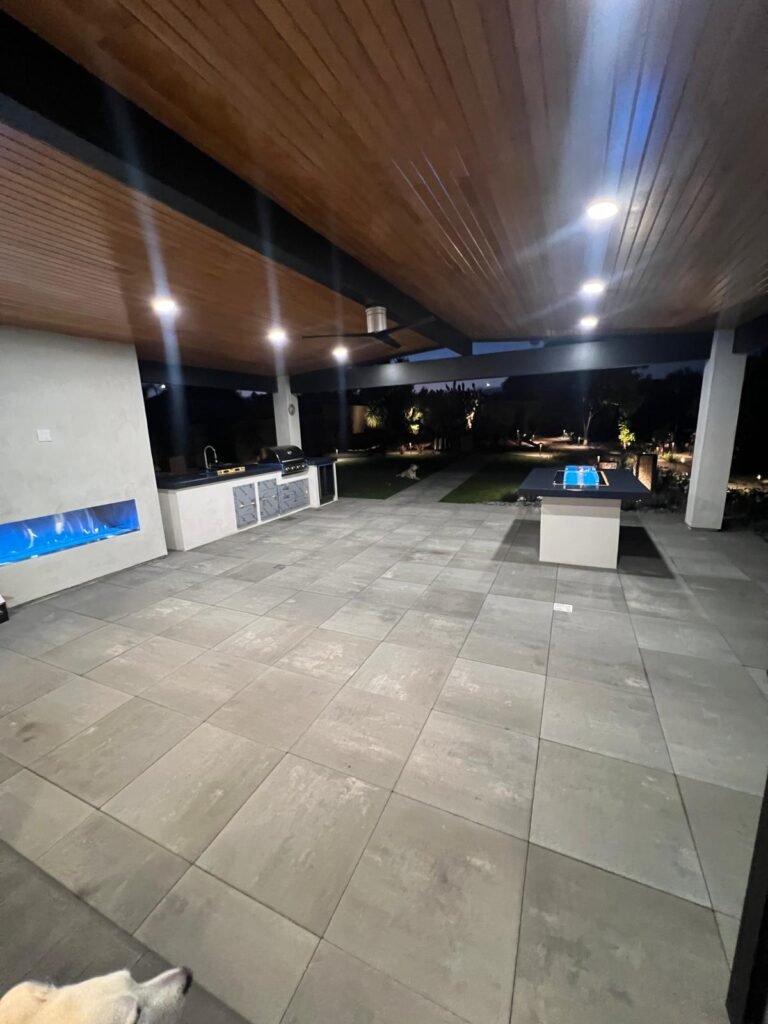
Standing water after rain is often a sign that a section of the surface has settled enough to disrupt proper drainage. Left unaddressed, pooling water accelerates erosion underneath and can lead to further sinking.
Color Fading and Staining
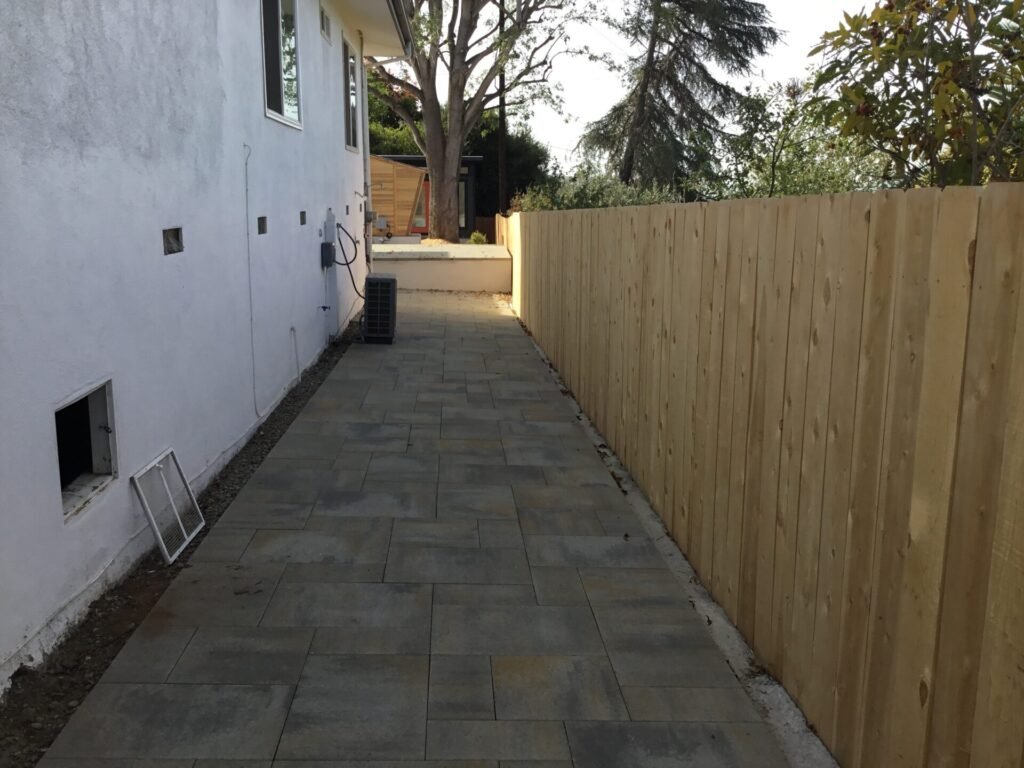
Prolonged sun exposure and lack of sealing can fade paver color over time, especially on unsealed surfaces. A color-enhancing or UV-protective sealant can restore appearance on pavers that are otherwise structurally sound.
Start Your Paver Repair & Replacement in Santee
Your family deserves outdoor spaces that make you proud and happy every single day. Let’s create something amazing together!
Or fill out our form for a free estimate
We’ll come to your property, listen to your ideas, and show you exactly how beautiful pavers can transform your outdoor spaces.
Paver Repair & Replacement in Santee, CA — Local Overview
Santee at a Glance
- Location: East San Diego County, in the San Diego River valley
- Community characteristics: Family-friendly neighborhoods with a mix of suburban and semi-rural properties
- Climate: Warm, dry summers and mild winters — repair needs are typically base- and drainage-related rather than freeze-thaw related
- Terrain: Ranges from flat valley lots to sloped hillside properties, which can concentrate water runoff
- Housing: A mix of newer and older single-family homes, many with paver surfaces installed years ago
Why Santee Homeowners Need Paver Repair
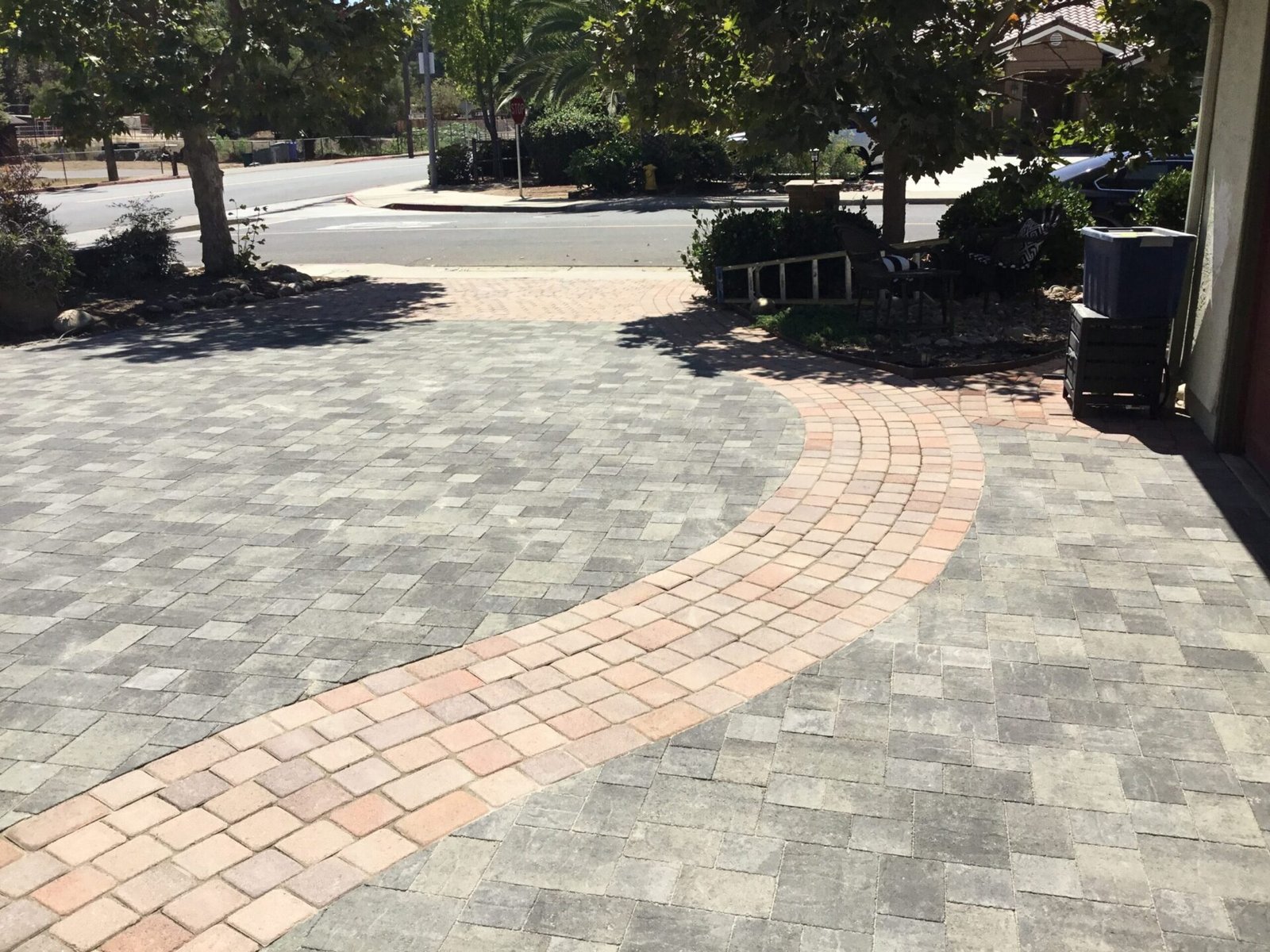
Santee’s dry climate means paver problems here are typically tied to base compaction, drainage, and joint sand wear rather than the freeze-thaw damage common in colder regions. Sloped lots throughout the area can direct water toward specific sections of a patio or driveway, accelerating erosion in those spots.
Older installations, especially those done before polymeric sand became standard, are more prone to weed growth and joint washout, which is one of the most common repair requests we see across Santee properties.
How Much Does Paver Repair & Replacement Cost in Santee?
| Project Type | Typical Cost Range | Factors Affecting Price |
|---|---|---|
| Individual paver replacement (per unit) | $15 – $30 per paver | Material match, accessibility |
| Small localized repair (releveling, 1–2 sunken spots) | $500 – $1,500 | Base condition, area size |
| Re-sanding joints (full surface) | $1 – $3 per sq ft | Surface size, sand type |
| Lift-and-relevel repair (larger area) | $12 – $22 per sq ft | Base condition, drainage correction |
| Full section replacement | $15 – $30 per sq ft | New material, base rebuild, disposal |
These ranges reflect typical Santee-area projects. Minor repairs are often a few hundred dollars, while extensive base failure requiring rebuild can run several thousand. A free on-site assessment is the only way to know which category your project falls into.
Factors That Affect Paver Repair Cost
- Root cause — a base issue requires excavation and recompaction, while a joint sand issue is a much lighter fix
- Area size — larger sunken or shifted areas require more excavation, base correction, and resetting
- Paver material match — sourcing matching pavers for an older installation can add cost if the original product is discontinued
- Accessibility — repairs in tight side yards or hard-to-reach backyards can increase labor time
- Drainage correction — fixing an underlying drainage issue adds scope beyond simply resetting pavers
- Edge restraint condition — reinstalling failed edging is often necessary to prevent the repair from recurring
Local Santee Factors That Affect Cost
Santee’s mix of sandy and clay-heavy soils affects how susceptible a given property is to base settling, and sloped lots common in the area can concentrate water runoff toward certain sections of a patio or driveway. Older installations that predate proper polymeric sand use are also more prone to joint sand washout and weed intrusion.
Properties with mature trees near a paver surface may see root-related lifting, which requires a different repair approach than a simple base settling issue.
Why a Professional Assessment Matters
An accurate repair estimate starts with identifying the actual cause of the damage — not just quoting a price to reset what’s visible. A rushed repair that skips proper base correction typically fails again within a season.
A clear, itemized assessment tells you honestly whether you’re looking at a simple joint sand refresh, a targeted lift-and-relevel, or a larger rebuild — so you can make an informed decision before any work begins.
Repair vs. Full Replacement: How We Decide
When Repair Makes Sense
Localized sinking, a handful of cracked pavers, spreading edges, or joint sand loss are typically addressed through targeted repair — lifting, correcting the base, and resetting the affected area. Repair is almost always the faster and more cost-effective option when the damage is contained.
When Replacement Makes Sense
If a large percentage of the surface has failed, the original base was fundamentally under-built, or the pavers themselves are too worn, faded, or discontinued to match, a full or partial rebuild is usually the better long-term investment.
Why This Assessment Matters
Attempting to repair a surface with a widespread base failure often means paying for a repair that fails again within a year or two. A proper on-site assessment identifies which scenario you’re actually dealing with before any work begins.
Why Choose Us for Paver Repair & Replacement in Santee?
Local Knowledge of Santee Properties
We understand the soil conditions, drainage patterns, and common installation issues found throughout Santee, which helps us diagnose problems accurately.
Quality Materials and Repair Practices
We correct the underlying base issue rather than just resetting what’s visible, and use polymeric sand in joints to resist future washout and weed growth.
Attention to Detail
Repaired sections are set level and flush with the surrounding surface, so the fix blends in rather than standing out.
Clear Communication
You’ll get an honest assessment of whether your situation calls for a targeted repair or a larger rebuild, along with a clear price before work begins.
Homeowner-Focused Service
We prioritize fixing the actual problem so it doesn’t come back, rather than a quick patch that only addresses the surface.
Need Help?
Frequently Asked Questions About Paver Repair & Replacement in Santee
Below are some of the most common questions we get from families about Pavers.
How much does paver repair cost in Santee?
Costs vary widely with scope: replacing a single damaged paver typically runs $15 to $30 per unit, a small localized releveling repair often falls between $500 and $1,500, and a larger lift-and-relevel repair runs roughly $12 to $22 per square foot. Full section replacement, when a rebuild is genuinely needed, typically costs $15 to $30 per square foot. A free on-site assessment is the only way to know which category applies to your situation.
Why are my pavers sinking?
Sunken pavers are almost always a base problem, not a problem with the pavers themselves. The most common cause is a base that wasn’t compacted properly during the original installation, though water erosion from poor drainage can also wash out the base over time and create the same result.
Why are my pavers shifting or spreading apart?
Shifting or spreading pavers usually point to a failed or missing edge restraint along the perimeter. Without solid edging holding the outer pavers in place, the whole field can gradually loosen and drift outward, especially in driveways where vehicle weight pushes outward on the surface.
Can a single cracked or damaged paver be replaced without redoing the whole area?
Yes, in most cases. Because a paver surface is made of individual units, a damaged paver can be lifted and swapped for a new one without disturbing the surrounding area — as long as a reasonably close match is available. This is one of the biggest practical advantages pavers have over poured concrete.
Why do weeds keep growing between my pavers?
Weeds growing in the joints are almost always a sign that the original joint sand has washed out or eroded, leaving gaps for seeds to take root. Refilling the joints with polymeric sand, which hardens when wet, significantly reduces weed growth compared to plain sand.
How long does a paver repair typically take?
Most localized repairs, such as releveling a sunken area or replacing a handful of pavers, are completed in a single day. Larger repairs involving base correction across a bigger area, or a partial rebuild, can take several days depending on scope.
How can I prevent pavers from sinking or shifting again in the future?
Reapplying polymeric sand every few years as joints wear, keeping the surface clear of debris, and addressing drainage issues promptly all help prevent future sinking and shifting. Periodic inspection for early signs like small dips or loosening pavers also helps catch problems before they spread.
Contact Paver Installation Santee Today!
Whether it’s a few sunken pavers, a shifting driveway edge, or a section that’s ready for a rebuild, we’re here to help. We provide clear, no-pressure estimates for paver repair and replacement throughout Santee and nearby communities including El Cajon, La Mesa, Lakeside, Spring Valley, Lemon Grove, Rancho San Diego, and San Carlos.
Every project starts with a free on-site assessment to diagnose the actual cause and provide a clear, honest recommendation — no obligation required.